
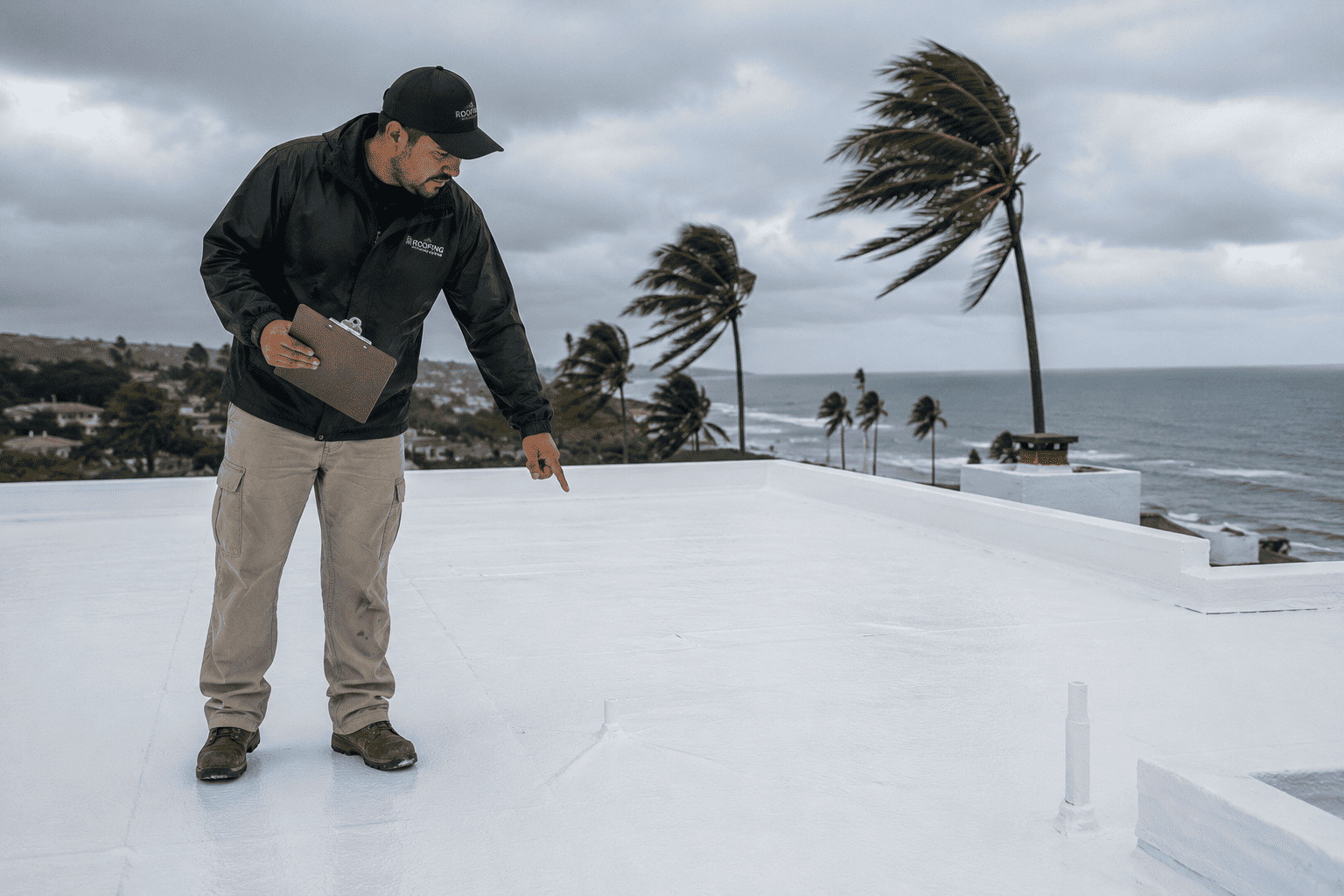
Why Wind Pressure Matters More Than Many Owners Realize
A wind uplift roof problem begins when strong air movement creates pressure changes that try to pull roofing materials away from the structure. Even when the roof looks secure from the ground, repeated wind exposure can put stress on edges, seams, and attachment points over time.
This is especially important in open or elevated areas of California, where roofs may face stronger and more consistent wind conditions. Protection is not only about rain. It is also about making sure the roof system stays attached and performs under pressure.
How Wind Uplift Affects Roofing Systems
Wind does not need to tear a roof apart in one dramatic event to cause problems. Ongoing pressure can gradually stress the system, especially around perimeter areas and transitions where air movement tends to create more force. Over time, those repeated effects can weaken performance if the roof design is not prepared for them.
Once parts of the system begin to loosen or shift, the roof can become more vulnerable to both weather exposure and future structural wear.
Why Attachment Method Matters
Mechanical Fastening Has More Interruption Points
Mechanically fastened systems depend on discrete attachment points across the roof assembly. Those systems can be appropriate in some applications, but they also create a pattern of repeated penetrations and connections that need to keep performing as wind pressure changes.
Adhesive Foam Systems Create Broader Contact
Adhesive foam systems help distribute attachment across a wider area because the material bonds directly to the roof surface instead of depending only on isolated fasteners. That broader contact can support stronger resistance when wind tries to lift the assembly.
Continuity Supports Better Performance
A more continuous roofing approach can reduce weak points where uplift forces may begin to affect the system. When the roof assembly is designed to act together, it is better positioned to handle demanding weather conditions.
Practical Ways to Protect Against Wind Uplift
Roof protection starts with choosing systems that match the exposure level of the property. Open sites, elevated buildings, and roofs facing stronger weather patterns should be evaluated with wind performance in mind rather than treated as standard conditions.
Regular inspections also matter. Identifying wear, surface changes, or attachment concerns early can help prevent a manageable issue from becoming a larger roof failure later.
A Stronger Roof in Wind-Exposed Conditions
Wind uplift affects your roof by placing upward pressure on the roofing system and testing how well it stays bonded over time. In exposed California conditions, adhesive foam systems can provide stronger resistance than more interrupted attachment methods. For long-term roof protection, that system choice can make a major difference.
Protect Your Roof with Confidence — Choose FoamBond
When it comes to roofing underlayment, durability and performance matter. At FoamBond, we provide high-quality, energy-efficient solutions designed to withstand California’s diverse climate conditions. Whether you’re a contractor or a homeowner, our products are engineered to protect what matters most — your home, your investment, and your peace of mind.
Contact us today at 866-404-5440 or email us at office@foambond.com to learn how FoamBond can support your next roofing project with industry-leading innovation and reliability.