
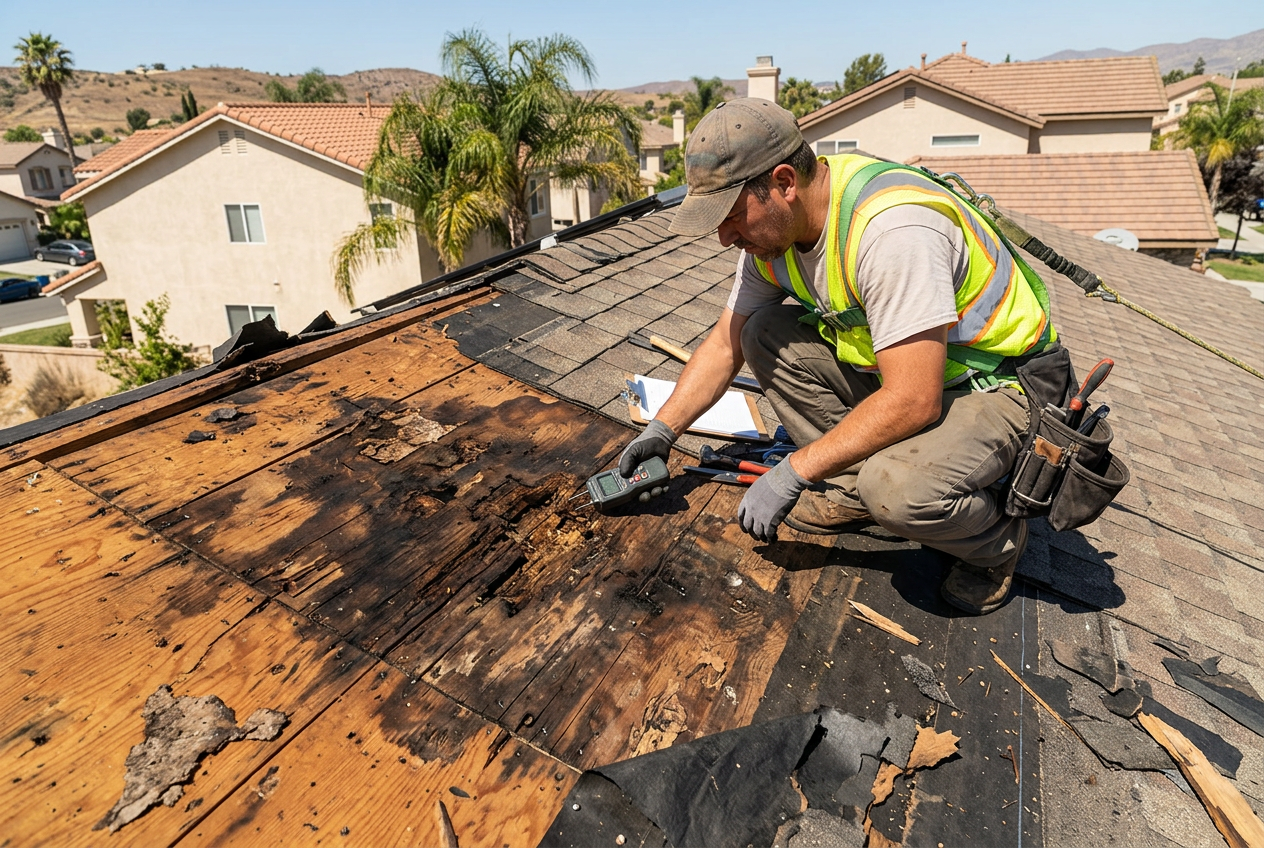
Tile roof underlayment can deteriorate even while concrete or clay tiles continue to look attractive from the street. Tiles form the visible, durable outer surface, but they are not the only layer responsible for keeping water away from the roof deck. Beneath them, underlayment provides secondary protection against rain, wind-driven moisture, and water that passes through gaps in the tile covering.
Because the underlayment is concealed, homeowners may assume the roof is performing well based on appearance alone. A tile can remain intact long after the material below it has aged, shifted, or become damaged. Understanding that difference helps homeowners make better decisions about inspection, restoration, and replacement.
Why Underlayment Can Age Before the Tiles
California tile roofs face heat, strong sun, seasonal rain, wind, and repeated temperature changes. The tiles help shield the underlayment, but the concealed layer still experiences thermal movement and may be exposed at laps, penetrations, valleys, edges, or areas where tiles have shifted. Installation quality and roof geometry also affect how effectively water is directed away.
Foot traffic, maintenance work, falling debris, or repairs to nearby roof equipment can disturb tiles and damage the material underneath. In addition, flashing around walls, vents, chimneys, and other transitions may age at a different rate than the field of the roof. These details often deserve special attention during an inspection.
Warning Signs of Underlayment Failure
Interior stains or recurring leaks
Water marks on ceilings or walls can indicate that moisture has passed through more than one protective layer. A leak that returns after a small surface repair may point to a broader issue below the tiles or at an adjoining flashing detail.
Slipped cracked or missing tiles
Damaged or displaced tiles do not automatically mean the underlayment has failed, but they increase its exposure. If the condition has gone unnoticed, the concealed layer may have experienced sunlight, debris, or direct rainfall that accelerates wear.
Deterioration near valleys edges and penetrations
Valleys carry concentrated water, while roof edges and penetrations depend on precise transitions. Evidence of staining, debris buildup, loose materials, or repeated patching in these locations can justify a more complete evaluation.
Aging with an uncertain maintenance history
When homeowners do not know what underlayment was installed, how the roof was assembled, or what repairs were completed, visible tile condition provides only part of the picture. An assessment can help establish the current condition without relying on assumptions about age alone.
Repair Restoration or Replacement
The appropriate response depends on the extent and location of the problem. A limited issue involving a few displaced tiles or a specific flashing detail may allow for a targeted repair if the surrounding underlayment remains serviceable. More widespread deterioration may require carefully removing and preserving reusable tiles, replacing the protective layer, correcting deck or flashing issues, and reinstalling the roof covering.
In other cases, the condition of the tile, fastening system, deck, or roof layout may make broader replacement more practical. The decision should follow an inspection of the complete assembly. Replacing only what is visible can leave concealed weaknesses in place, while replacing sound components unnecessarily can increase the project scope without adding value.
What a Thorough Evaluation Should Consider
A roofing assessment should consider tile condition, underlayment exposure, deck stability, valleys, flashing, penetrations, roof-to-wall transitions, and signs of moisture inside the attic or home. Contractors should also consider whether the existing materials are compatible with the proposed repair or restoration approach.
Homeowners can ask how tiles will be removed and staged, which components are expected to be reused, how damaged decking will be handled, and what protective layer is proposed. Clear documentation of the scope helps prevent misunderstandings once the concealed parts of the roof are opened.
Do Not Let Good-Looking Tile Hide a Weak Layer
Tile roof underlayment does not have to be visible to be essential. When leaks, shifted tiles, aging details, or an uncertain history raise concerns, a complete inspection can clarify whether a focused repair, restoration, or replacement is appropriate. Protecting the roof deck requires looking beneath the surface and treating the roof as a coordinated system.
Protect Your Roof with Confidence — Choose FoamBond
When it comes to roofing underlayment, durability and performance matter. At FoamBond, we provide high-quality, energy-efficient solutions designed to withstand California’s diverse climate conditions. Whether you’re a contractor or a homeowner, our products are engineered to protect what matters most — your home, your investment, and your peace of mind.
Contact us today at 866-404-5440 or email us at office@foambond.com to learn how FoamBond can support your next roofing project with industry-leading innovation and reliability.