Desert dust and sand can accelerate roofing material wear through repeated abrasion, accumulation, and interference with drainage. In Palm Springs and the Coachella Valley, roofs are exposed not only to intense sun and temperature changes but also to airborne particles carried by regular winds and stronger weather events. Those particles may appear harmless, yet their effects build over time.
Dust can settle into laps, seams, valleys, around penetrations, and behind rooftop equipment. Sand can move across exposed surfaces like fine abrasive material. When these conditions combine with heat, moisture, and foot traffic, protective finishes and vulnerable details may age faster than homeowners or building managers expect.
How Airborne Particles Affect Roof Surfaces
Abrasive movement across exposed materials
Wind-driven sand can repeatedly strike or move across roofing surfaces. Over time, that action may wear coatings, roughen exposed materials, or affect edges that receive concentrated airflow. The degree of wear depends on the material, roof slope, wind exposure, and the amount of debris present.
Buildup in low and sheltered areas
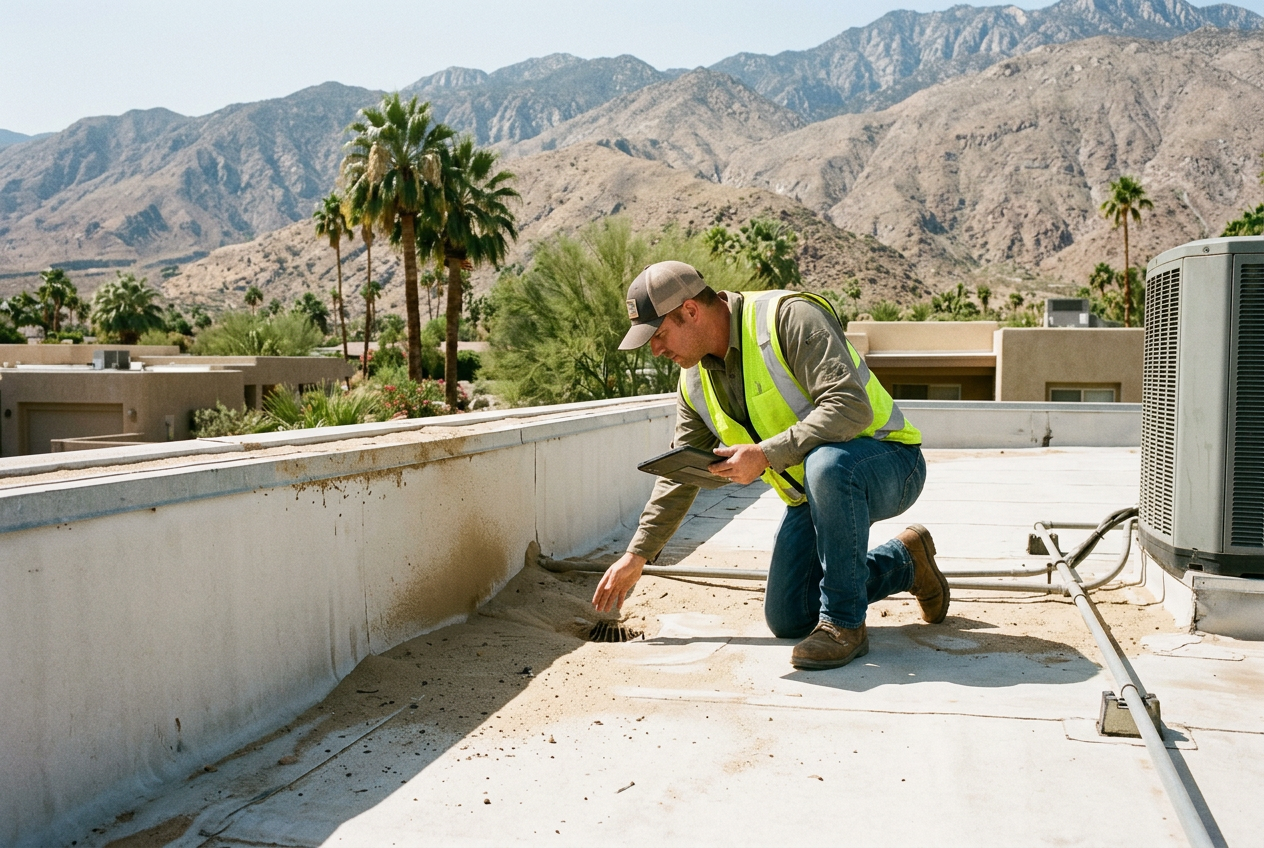
Dust and sand do not distribute evenly. They collect where air movement slows, including roof valleys, behind parapets, at roof-to-wall intersections, beneath equipment, and around curbs. Accumulation can hold moisture against the surface after rain or maintenance washing and may conceal small cracks, open seams, or displaced materials.
Blocked or slowed drainage
Debris can reduce the efficiency of gutters, scuppers, drains, and narrow water paths. When water moves slowly or ponds near accumulated sediment, the roofing assembly experiences longer moisture exposure. Repeated wetting and drying can place additional stress on seams, flashing, and protective layers.
Damage caused during cleaning
Particles can become more abrasive when they are dragged beneath shoes, tools, or maintenance equipment. Aggressive sweeping or unsuitable washing methods may also disturb roofing materials. Cleaning should remove buildup without grinding it into the surface or forcing water beneath laps and flashing.
Areas That Deserve Closer Inspection
The most exposed field areas should be reviewed for visible surface wear, while sheltered areas should be checked for accumulation. Edges, corners, penetrations, seams, valleys, drainage points, and the spaces around HVAC equipment commonly experience different airflow and debris patterns. A roof can look clean from the ground while still holding significant material in these locations.
Underlayment is concealed beneath the roof covering, but surface damage and open details can increase its exposure to wind-driven dust and moisture. Missing or shifted materials should be corrected so the protective layers below are not asked to compensate indefinitely for weaknesses above.
Practical Maintenance for Desert Properties
Schedule inspections around local conditions
Routine inspections can be timed after major wind events and before seasonal rain. The goal is to identify changes, clear drainage paths, and find displaced materials before debris or water reaches more vulnerable parts of the assembly.
Use roof-appropriate cleaning methods
Cleaning methods should suit the roofing material and avoid unnecessary foot traffic. Loose debris can be removed carefully, with special attention to drainage components and equipment areas. If access or the surface condition creates risk, a qualified roofing professional should perform the work.
Protect the roof during mechanical service
Rooftop HVAC maintenance is common in desert communities. Defined access routes and careful tool handling can reduce the chance that trapped sand is ground into the roof or that service work damages flashing and seams.
Address small defects before exposure expands
Loose edges, failed transitions, damaged surfacing, and open penetrations can allow dust and weather to reach deeper layers. Prompt repairs help preserve the intended protective sequence of the roof covering, underlayment, flashing, and deck.
Long-Term Performance Requires Desert-Specific Care
Desert dust and sand are ongoing environmental conditions, not one-time events. Material selection, careful installation, regular inspection, clear drainage, and gentle maintenance all help roofing systems manage that exposure. In Palm Springs and the Coachella Valley, a practical plan that accounts for both heat and airborne abrasion can support more consistent performance throughout the roof assembly.
Protect Your Roof with Confidence — Choose FoamBond
When it comes to roofing underlayment, durability and performance matter. At FoamBond, we provide high-quality, energy-efficient solutions designed to withstand California’s diverse climate conditions. Whether you’re a contractor or a homeowner, our products are engineered to protect what matters most — your home, your investment, and your peace of mind.
Contact us today at 866-404-5440 or email us at office@foambond.com to learn how FoamBond can support your next roofing project with industry-leading innovation and reliability.