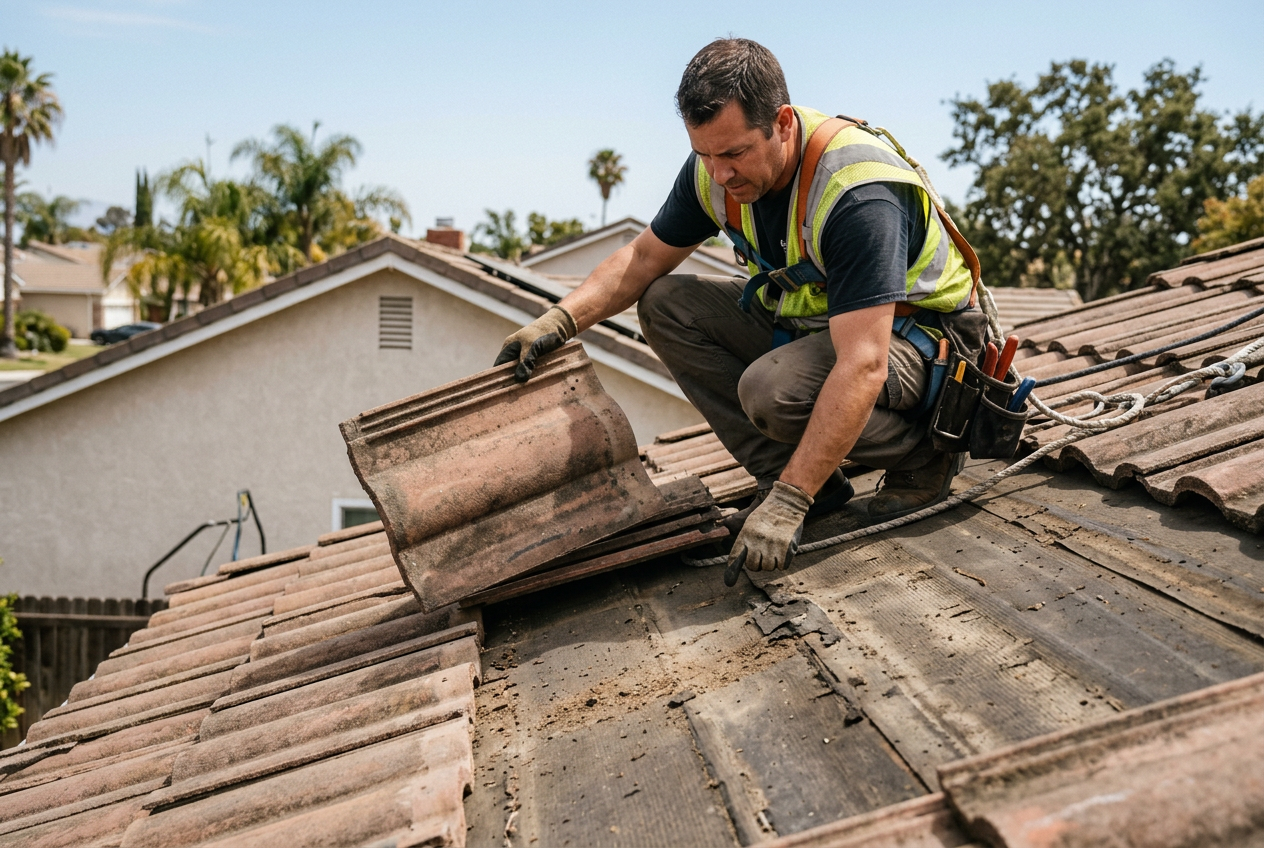
Roof deck moisture can affect far more than the visible roofing surface. When water or vapor becomes trapped beneath roofing materials, the deck may remain damp for long periods without producing an obvious interior leak. Over time, that hidden exposure can weaken wood-based components, contribute to decay, and reduce the stability of the assembly that supports the roof.
The roof deck connects the exterior covering to the structural framing below. It also provides the surface on which underlayment and other protective layers are installed. If the deck loses strength or becomes uneven, the performance of the entire roofing system can suffer. Recognizing moisture as a system-wide concern helps homeowners address the cause before damage spreads.
How Moisture Reaches the Roof Deck
Water intrusion through vulnerable details
Rain can reach the deck through damaged roofing materials, poorly sealed penetrations, or weak flashing transitions. The entry point may be small, but repeated exposure can keep a localized section of decking wet. Because water can travel along fasteners or structural members, the visible symptom may appear some distance from the original opening.
Condensation inside the roofing assembly
Moisture does not always enter from outdoors. Warm, humid air can move toward a cooler roof surface and condense within the assembly when ventilation, air movement, or material placement is inadequate. If that moisture cannot dry effectively, the roof deck may experience prolonged dampness even when the exterior covering appears intact.
Moisture trapped during installation
Installing roofing components over a wet or insufficiently assessed deck can seal existing moisture into the system. That is why preparation matters. A clean, sound, and appropriately dry substrate gives the underlayment and finished roof a better foundation for long-term performance.
Structural Effects That Can Develop Over Time
Persistent moisture can cause wood decking to swell, soften, delaminate, or lose its ability to hold fasteners securely. It can also create conditions that support wood rot. As deterioration progresses, portions of the roof may begin to sag, feel soft underfoot, or provide uneven support for roofing materials.
The consequences are not limited to the deck itself. Weakened sheathing can place additional stress on nearby framing and connections. Damaged areas may also make future repairs more extensive because roofing layers must be removed before the underlying condition can be evaluated and corrected.
Signs That May Point to a Moisture Problem
Homeowners should pay attention to recurring ceiling stains, musty odors, peeling finishes, visible attic discoloration, rusted fasteners, or roof areas that appear uneven. These signs do not identify the cause on their own, but they justify a closer inspection. A roof can also have moisture damage without obvious indoor symptoms, especially when the problem is confined beneath the outer materials.
A professional assessment may include visual inspection of the roofing surface, attic, penetrations, flashing, and deck condition. Moisture readings can help identify areas that require further evaluation. The goal is to understand both where moisture is present and how it entered or became trapped.
Ways to Protect the Complete Roofing Assembly
Start with a sound substrate
Before a new roof or restoration begins, deteriorated decking should be identified and the substrate should be evaluated for moisture. Covering a compromised surface can hide the issue rather than resolve it.
Use compatible protective materials
Underlayment is part of the roof’s secondary weather-protection layer. Selecting materials that suit the roof covering, climate, and assembly design helps manage exposure when water moves beneath the exterior surface. Compatibility between the deck, underlayment, fasteners, flashing, and finished roofing is essential.
Pay attention to installation details
Proper laps, sealed penetrations, transitions, and flashing details help limit water entry. Ventilation and moisture-management needs should also be considered as part of the full assembly rather than treated as separate concerns.
Protecting Structural Integrity Starts Early
Roof deck moisture is easier to manage when it is found before widespread deterioration develops. Regular inspections, careful preparation, suitable material selection, and coordinated installation all help protect the deck and the structural components below it. A strong roofing system depends on every layer working together, beginning with a stable and properly assessed foundation.
Protect Your Roof with Confidence — Choose FoamBond
When it comes to roofing underlayment, durability and performance matter. At FoamBond, we provide high-quality, energy-efficient solutions designed to withstand California’s diverse climate conditions. Whether you’re a contractor or a homeowner, our products are engineered to protect what matters most — your home, your investment, and your peace of mind.
Contact us today at 866-404-5440 or email us at office@foambond.com to learn how FoamBond can support your next roofing project with industry-leading innovation and reliability.