
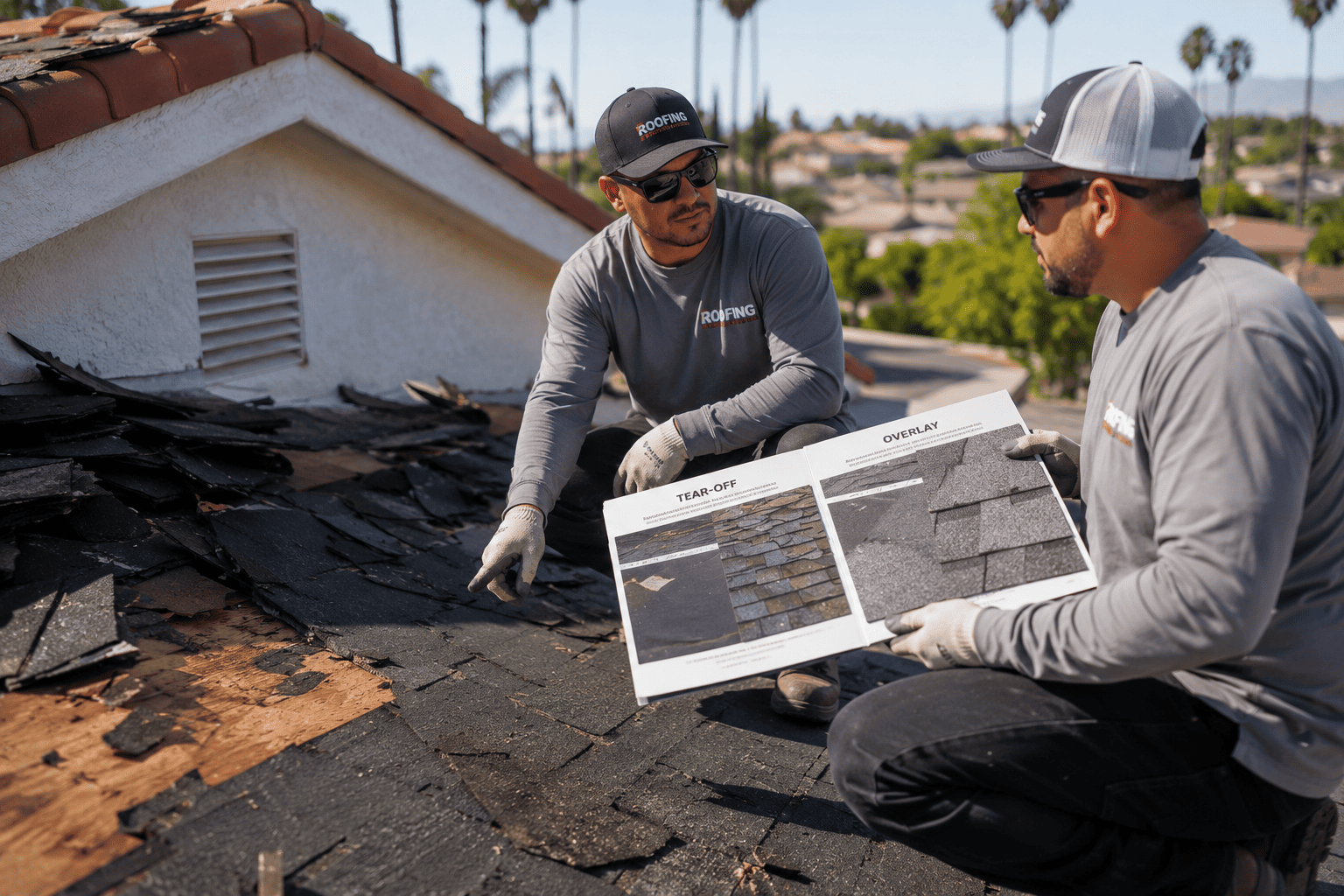
Choosing between re-roofing and a roof overlay can shape the cost, timing, and long-term performance of a roofing project. For California property owners and contractors, the right decision depends on more than budget alone. The existing roof condition, local climate exposure, and the expected lifespan of the system all matter.
A full re-roofing project removes old roofing materials before a new protection system is installed. An overlay adds a new layer over the current roof when conditions allow it. Both approaches can be useful, but they solve different problems and carry different tradeoffs.
What Makes Re-Roofing Different
Re-roofing is often the better fit when the current system shows widespread wear, trapped moisture concerns, or signs that the roof deck needs a closer look. By removing the existing material, contractors can inspect the substrate, correct hidden trouble spots, and start with a cleaner foundation for the next system.
This route usually involves more labor and debris removal, so the project may take longer and cost more upfront. Even so, the added visibility can prevent a new layer from covering deeper problems that would continue to affect performance.
When a Full Tear-Off Adds Value
A tear-off can make sense when multiple problem areas exist across the roof, when the current surface has aged unevenly, or when the owner wants a longer planning horizon. It also creates a better opportunity to improve roof preparation, drainage details, and underlayment performance before new materials are installed.
When an Overlay Can Be Practical
A roof overlay is usually considered when the existing roof is still relatively stable and local requirements allow another layer. Because the original material remains in place, installation can move faster and disposal costs may be lower.
That efficiency has limits. An overlay does not provide the same opportunity to inspect the full roof assembly, and it adds weight to the structure. If the existing roof already has trapped issues, the overlay may only delay a larger repair decision.
Comparing Cost, Timeline, and Risk
From a budgeting perspective, overlays are commonly viewed as the lower-cost option in the short term. Re-roofing usually requires more labor hours, more cleanup, and a broader scope. However, short-term savings should be balanced against future maintenance risk and the possibility of needing another intervention sooner.
Timeline matters as well. An overlay can reduce disruption when a project needs to move quickly, while a full replacement may be better when performance certainty matters more than speed. For many owners, the real question is whether the roof needs a cosmetic refresh or a more dependable long-term solution.
A Smarter Decision Starts With Roof Condition
No two roofs age the same way, especially under California sun, seasonal temperature swings, and weather exposure. Before choosing a roof overlay or re-roofing path, contractors and owners should evaluate the roof’s current condition, the structural limits of the assembly, and the performance goals for the next phase of the building.
When the goal is to protect the property with confidence, the best option is the one that matches the roof’s actual condition rather than forcing a faster or cheaper path that may not hold up.
Protect Your Roof with Confidence — Choose FoamBond
When it comes to roofing underlayment, durability and performance matter. At FoamBond, we provide high-quality, energy-efficient solutions designed to withstand California’s diverse climate conditions. Whether you’re a contractor or a homeowner, our products are engineered to protect what matters most — your home, your investment, and your peace of mind.
Contact us today at 866-404-5440 or email us at office@foambond.com to learn how FoamBond can support your next roofing project with industry-leading innovation and reliability.