
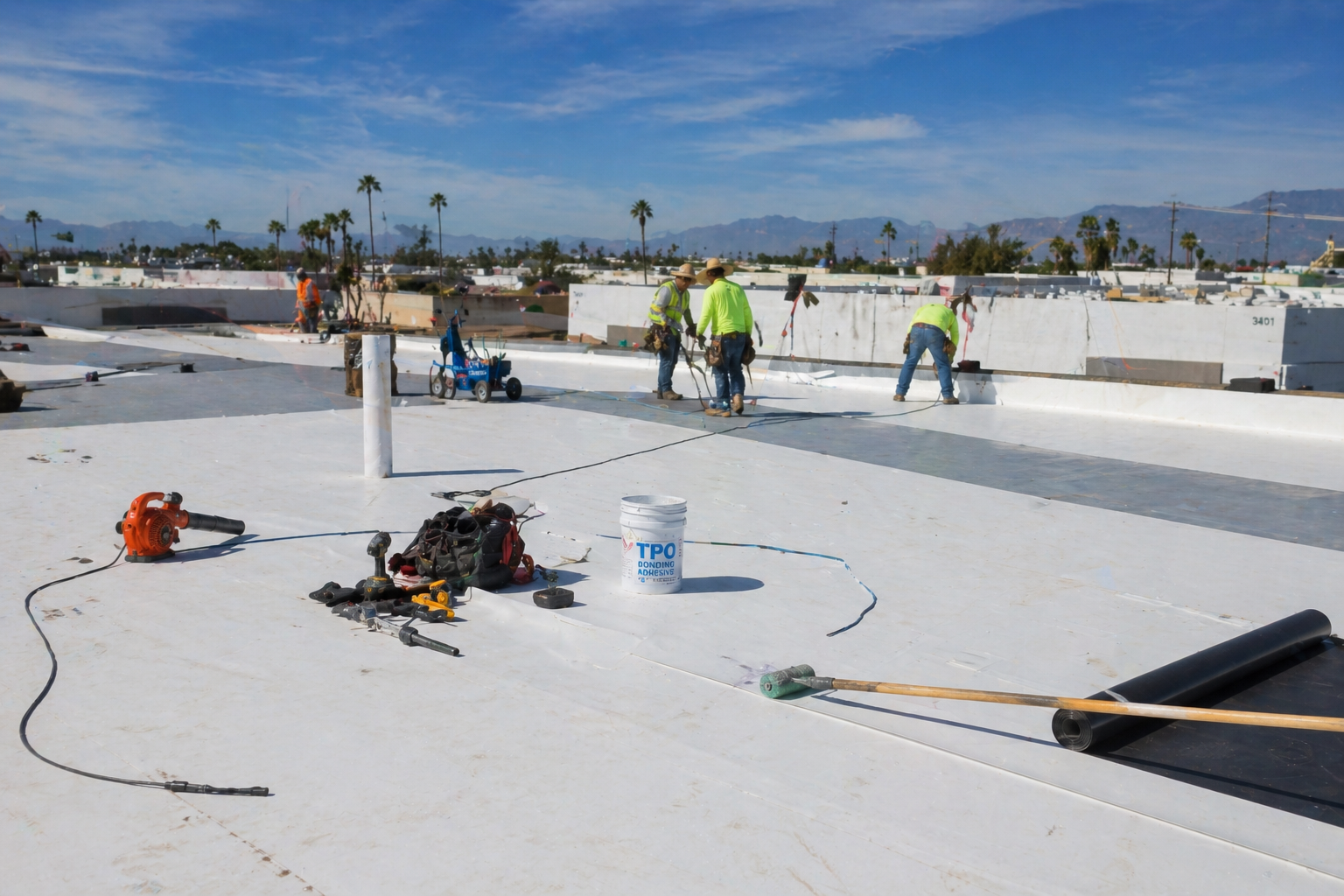
Single-ply roofing has become a practical option for commercial properties that need dependable roof protection without adding unnecessary weight to the building envelope. In Southern California, where heat, sun exposure, and long-term performance all matter, this roofing approach stands out for business owners who want efficiency and durability working together.
For contractors and property managers evaluating roofing systems, single-ply membranes offer a straightforward combination of installation flexibility, weather resistance, and consistent performance. Understanding why these systems work well in commercial environments can make planning, upgrades, and maintenance decisions much clearer.
Why Single-Ply Roofing Fits Commercial Properties
Commercial buildings often have wide roof spans, rooftop equipment, and maintenance demands that call for materials capable of covering large areas efficiently. Single-ply membrane systems are commonly selected for these projects because they provide broad coverage with a relatively lightweight profile, which can simplify planning for many structures.
That lighter construction matters when owners want strong protection without relying on heavier roofing assemblies. It can also support a cleaner installation process for large buildings where efficiency and long-term roof preparation are major priorities.
Key Benefits for Southern California Businesses
Lightweight Performance
A lightweight roofing system can be an advantage on commercial properties where structural considerations, accessibility, and installation planning are all part of the project. Single-ply membranes help deliver reliable coverage while avoiding the bulk associated with heavier alternatives.
Energy-Conscious Roofing Strategy
In a region known for strong sunlight and warm temperatures, energy-efficient roofing decisions matter. Single-ply systems are often part of a broader approach to helping buildings manage heat exposure more effectively, which aligns with the needs of many Southern California commercial properties.
Weather and Fire Considerations
Commercial roofs must hold up against daily UV exposure and changing weather conditions. The notes for this topic also highlight fire resistance and recyclable material advantages, which helps explain why single-ply membranes remain relevant in modern commercial roofing conversations focused on durability and responsible material selection.
Practical Considerations Before Choosing a System
Before moving forward, property owners should think about roof size, drainage patterns, existing roof condition, and how much rooftop traffic the building sees. These details affect how any roof protection system performs over time and why proper preparation remains essential.
It is also helpful to work with a contractor who understands how the chosen membrane fits the building’s operating needs, maintenance expectations, and regional climate demands. The best roofing decisions are rarely about one feature alone; they come from balancing efficiency, durability, and real-world use.
Making a Smarter Commercial Roofing Decision
Single-ply roofing offers a practical mix of efficiency, protection, and long-term value for many commercial properties in Southern California. When business owners evaluate roofing materials with climate performance and maintenance needs in mind, they are better positioned to choose a system that supports the building well over time.
Protect Your Roof with Confidence Choose FoamBond
When it comes to roofing underlayment, durability and performance matter. At FoamBond, we provide high-quality, energy-efficient solutions designed to withstand California’s diverse climate conditions. Whether you’re a contractor or a homeowner, our products are engineered to protect what matters most — your home, your investment, and your peace of mind. Contact us today at 866-404-5440 or email us at office@foambond.com to learn how FoamBond can support your next roofing project with industry-leading innovation and reliability.